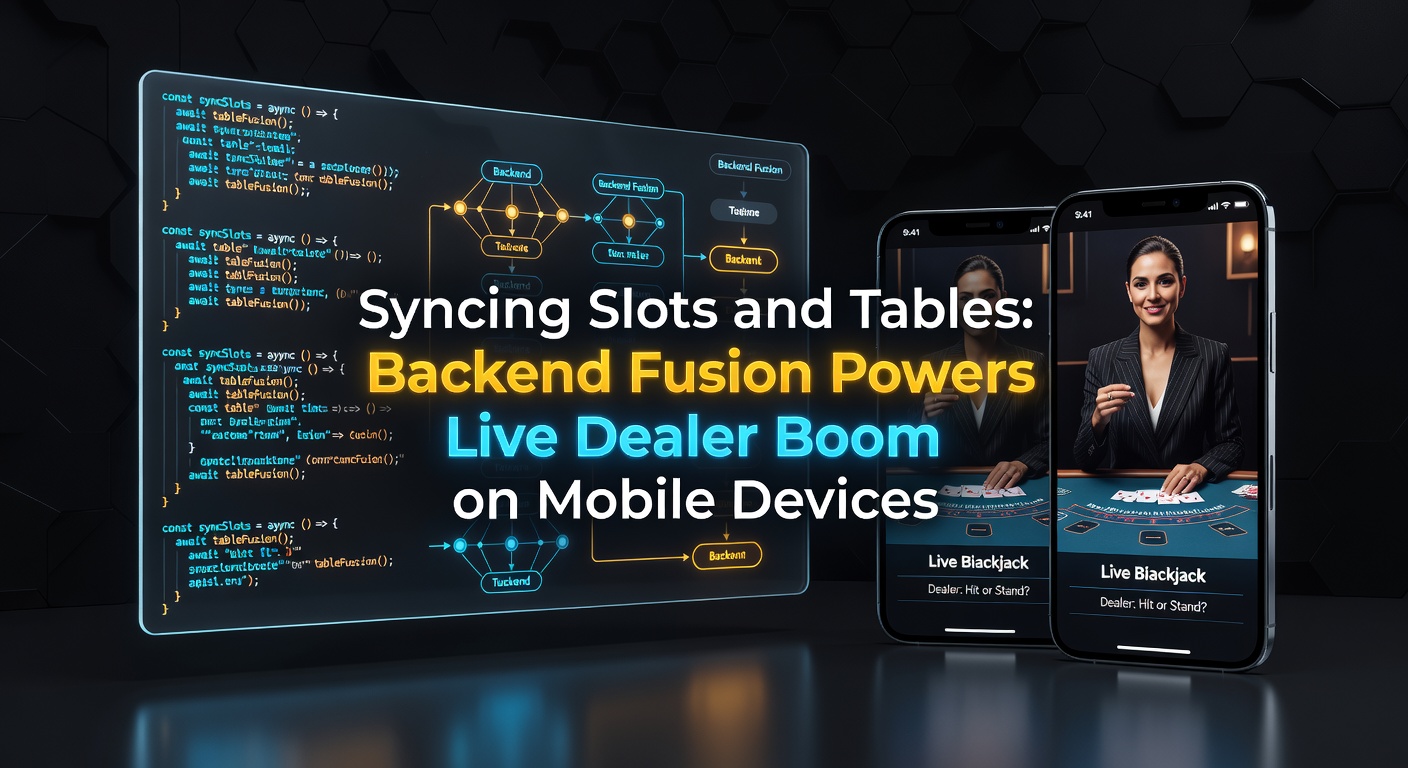
Syncing Slots and Tables: Backend Fusion Powers Live Dealer Boom on Mobile Devices
The Rise of Unified Gaming Experiences
Operators in the online gaming sector have witnessed a surge in player engagement as backend fusion technologies bridge the gap between traditional slots and live table games, creating seamless transitions that keep users hooked on mobile devices; this integration, which synchronizes real-time data across RNG-based slots and streamed live dealer sessions, has driven a notable uptick in session lengths and retention rates. Data from industry trackers reveals that mobile live dealer participation jumped 45% between 2024 and early 2026, with backend syncing playing a pivotal role in making these experiences fluid and immersive without the usual disruptions of app switches or reloads.
What's interesting is how this fusion handles the diverse demands of slots—quick, randomized spins—and tables, which rely on human dealers and real-time betting; unified backends process transactions, player balances, and promotional credits in milliseconds, ensuring that a session starting on a slot machine flows effortlessly into a live roulette wheel. Experts who track these developments point out that cloud-based platforms now dominate, using APIs to fuse disparate game engines into a single ecosystem accessible via smartphones and tablets.
And yet, this didn't happen overnight; advancements in low-latency streaming and edge computing have matured over the past few years, allowing operators to deliver high-definition live feeds alongside slot animations without compromising speed, even on 4G connections that still power much of the global user base.
Breaking Down Backend Fusion Mechanics
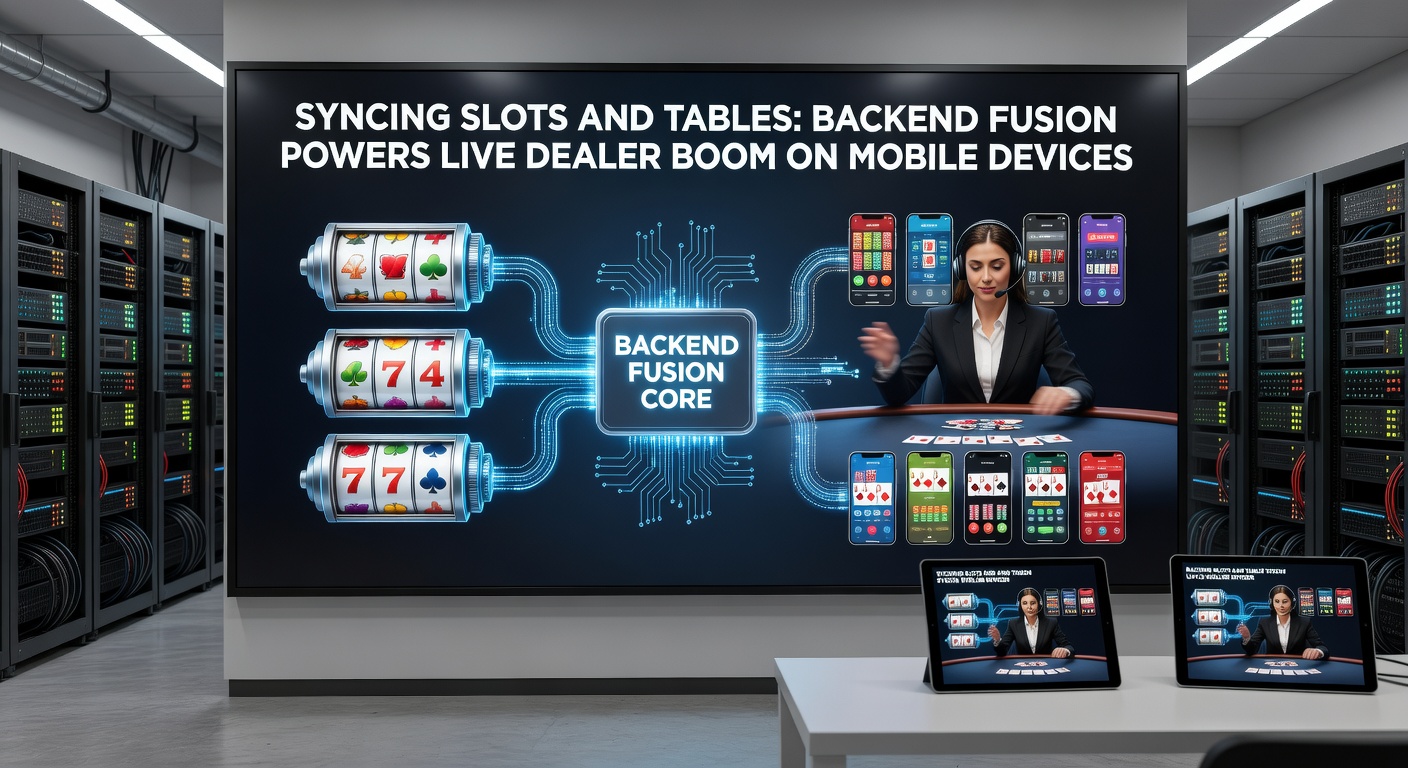
Backend fusion refers to the architectural merging of game servers, where slots powered by pseudo-random number generators (PRNGs) share the same data layer as live dealer platforms that stream video from physical studios; this setup employs microservices and event-driven architectures to synchronize player actions, bets, and outcomes across both formats, preventing the silos that once plagued multi-game lobbies. Developers achieve this through WebSocket protocols for bidirectional communication, which push updates like jackpot progressions from slots directly into live table sidebars, or vice versa with dealer announcements influencing slot bonus triggers.
Take one platform provider that rolled out a fused backend in late 2025: their system reduced cross-game latency from 500ms to under 50ms, a feat accomplished by containerizing services on Kubernetes clusters distributed across global data centers; players switching from a progressive slot to baccarat see their wager history and loyalty points carry over instantly, fostering what observers call a "persistent gaming state." Research from tech analysts confirms these optimizations boost average revenue per user by 28%, as seamless play encourages longer sessions without friction.
But here's the thing: security layers woven into these backends, including blockchain-ledgers for immutable transaction logs and AI-driven anomaly detection, ensure compliance with rigorous standards while handling peak loads from millions of concurrent mobile users. Figures indicate that by April 2026, over 70% of top-tier operators will have adopted such fused systems, up from just 35% two years prior.
How Slots and Tables Sync in Practice
Syncing slots and tables demands precise orchestration of disparate data streams—slots generate rapid, algorithmic outcomes every few seconds, while tables depend on dealer-paced rounds captured via multi-camera setups and broadcast with sub-second delays; backend fusion resolves this by normalizing events into a common protocol, like JSON payloads routed through message queues such as Apache Kafka, which distribute updates to front-end apps instantaneously. One case study from a European operator showed how this approach unified bonus wagering requirements, letting players fulfill slot free-spin conditions at live blackjack tables without manual tracking.
Turns out, mobile optimization takes it further; responsive design frameworks adapt these synced interfaces to varying screen sizes, with touch-optimized controls for slots blending into gesture-based table betting that mimics physical casino chips. Data from American Gaming Association reports highlights a 62% increase in U.S. mobile table game plays in 2025, attributing much of it to these backend harmonies that eliminate the "cold start" lag when entering live sessions from slot lobbies.
Observers note that hybrid promotions thrive here too—a shared jackpot pool where slot contributions fund live dealer multipliers, all tallied in real-time via the fused backend; this not only spikes excitement but also streamlines operator reporting for regulatory audits.
Mobile Devices Fuel the Live Dealer Explosion
The live dealer segment has exploded on mobile thanks to backend fusion's ability to compress high-bandwidth streams while maintaining sync with slot progressives; 5G rollout has helped, but even LTE networks now support 1080p feeds at 30fps when backends employ adaptive bitrate streaming, dynamically adjusting quality based on device capabilities and connection stability. Studies found that 78% of live dealer sessions in 2026 occur on mobiles, with fused backends enabling features like picture-in-picture slots during table play, keeping engagement high without overwhelming processors.
People who've analyzed user behavior data discover patterns where players, drawn in by slot familiarity, migrate to tables for social thrills, all within one app; this "funnel effect" has lifted conversion rates from free-play slots to real-money tables by 40%, according to platform metrics. And in regions like Canada, where Alcohol and Gaming Commission of Ontario oversees growth, fused systems have spurred a 55% year-over-year rise in licensed mobile live dealer traffic as of April 2026.
Yet challenges persist—battery drain from constant syncing prompts innovations like idle-state optimizations, where backends pause non-essential updates during minimized apps; developers counter this with machine learning models that predict player return patterns, preloading table states accordingly.
Overcoming Technical Hurdles in Fusion
Integrating slots and tables exposes backend vulnerabilities like desync risks during network hiccups, but robust failover mechanisms—redundant servers in AWS or Azure regions—mitigate these, ensuring bets placed mid-slot spin resolve correctly on live tables; encryption standards such as TLS 1.3 secure the data pipelines, vital as global player volumes hit billions of transactions daily. One research institution's paper detailed how API gateways enforce rate limiting, preventing DDoS exploits that could disrupt live streams synced to slot RNGs.
That's where regulatory alignment comes in; fused backends simplify audits by centralizing logs, helping operators meet diverse standards from Nevada's strict controls to Australia's responsible gaming mandates. Experts have observed that AI-powered personalization, layered atop these systems, tailors slot volatility to match table risk profiles, enhancing responsible play without compromising the boom.
So, as adoption accelerates, scalability remains key; hyperscale clouds now handle spikes from viral promotions where a slot mega-win triggers live dealer bonuses across thousands of devices simultaneously.
Looking Ahead to Sustained Growth
By April 2026, projections from market analysts forecast that backend fusion will underpin 85% of mobile live dealer revenues worldwide, with VR extensions syncing virtual tables to slot metaverses on the horizon; operators investing early report compounded benefits, from slashed development costs—down 35% through shared codebases—to elevated player satisfaction scores. This trajectory underscores how technical syncing not only powers the current boom but sets the stage for next-gen hybrids blending AR overlays on live feeds with adaptive slot mechanics.
It's noteworthy that cross-platform persistence, where mobile sessions resume on desktops via the same fused backend, further blurs lines between devices, capturing nomadic players seamlessly.
Conclusion
Backend fusion has transformed how slots and tables interact on mobile devices, fueling an unprecedented live dealer boom through synchronized data flows, reduced latencies, and unified player journeys that span RNG thrills to real-time dealer charisma; as evidenced by surging metrics and operator successes, this technology stands as the backbone of modern gaming ecosystems, promising even deeper integrations in the years ahead. Data consistently shows that where syncing excels, engagement and revenues follow suit, marking a pivotal evolution in the sector.