Tracing Data Pathways from Game Provider Feeds to Retention Protocols in Mobile Wagering Applications
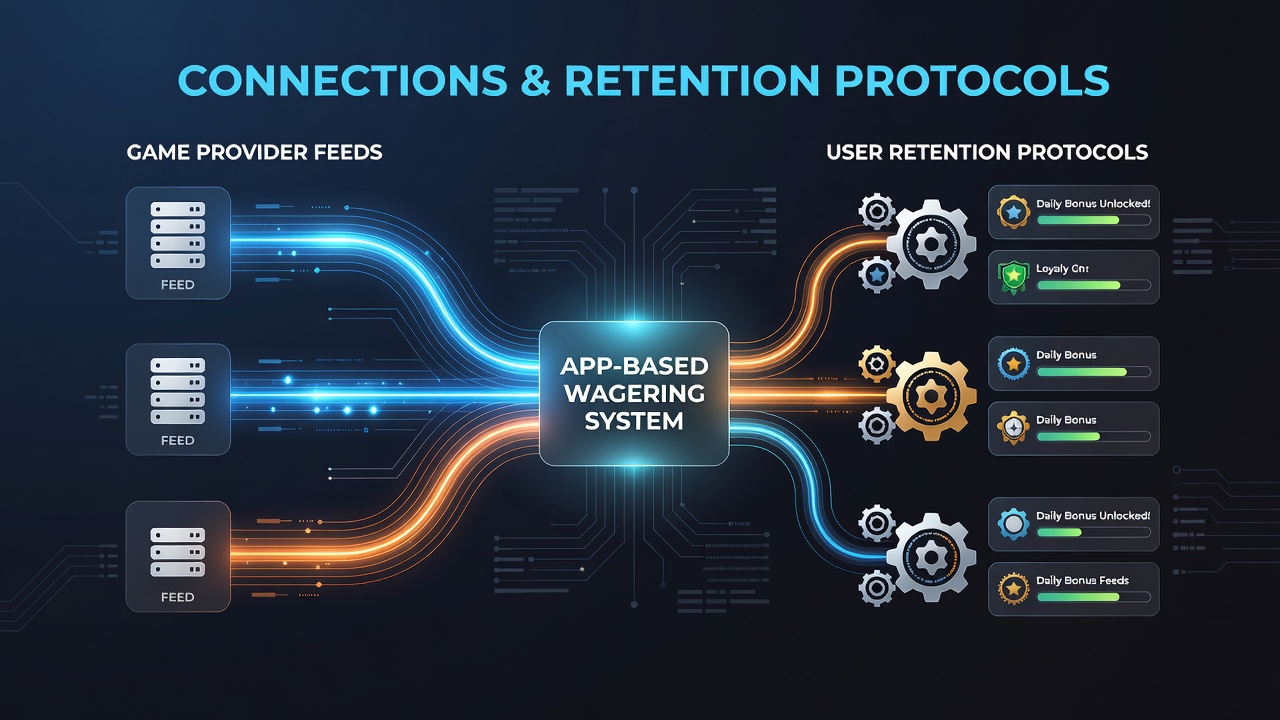
App-based wagering platforms rely on continuous streams of information from game providers to shape how operators keep players engaged over time, and those data flows now sit at the center of retention protocols that adjust offers and notifications in real time. Providers deliver metrics such as session duration, bet frequency, and outcome patterns directly into backend systems, where algorithms match individual behavior against predefined retention triggers like bonus eligibility or loyalty tier updates. Observers note that these integrations have grown more sophisticated since early 2025, when several major networks began routing provider feeds through unified player-management layers rather than isolated modules.
Research indicates that real-time feeds allow platforms to detect drops in activity within minutes, prompting automated responses such as targeted free spins or deposit matches that arrive while the user is still active. Data from multiple suppliers gets normalized into common formats so retention engines can compare performance across different game types without manual reconciliation. Experts have observed that this standardization reduces latency between a player’s last spin and the delivery of a personalized incentive, which in turn supports higher session recovery rates across both slot and table offerings.
Integration Points Between Provider Inputs and Retention Logic
Game provider feeds typically include round-by-round results, RTP adjustments, and player-specific metadata that retention protocols consume to build dynamic user profiles. When a provider signals a prolonged losing streak on a particular title, the system can cross-reference that data against the user’s historical deposit patterns and decide whether to issue a cashback credit or a tournament entry. Those who have studied these workflows report that the decision trees now incorporate machine-learning models trained on aggregated datasets from thousands of sessions, allowing operators to test retention offers on small cohorts before scaling them network-wide.
July 2026 brought new reporting requirements in several North American jurisdictions that require operators to log how provider data influences bonus distribution, creating an auditable trail between game outcomes and retention actions. Systems must now timestamp each feed ingestion event alongside the corresponding protocol trigger, which has prompted vendors to embed compliance hooks directly into their data pipelines. This level of granularity helps regulators verify that offers remain consistent with responsible gaming parameters while still supporting commercial retention goals.
Regional Examples of Data-Driven Retention
Platforms operating under the New Jersey Division of Gaming Enforcement have documented cases where provider feeds triggered retention sequences that increased seven-day return rates by aligning bonus timing with peak activity windows identified in the raw game data. Similar patterns appear in Australian markets where state-level data aggregation standards require providers to supply structured event logs that feed directly into loyalty engines. Operators in those regions combine the incoming streams with transaction records to determine when a player’s risk profile warrants a cooling-off nudge rather than an incentive.

One study revealed that networks using unified provider dashboards achieved faster iteration cycles for retention campaigns because analysts could trace a single data point from game server through teh CRM layer without switching between multiple vendor portals. The reality is that smaller operators often rely on middleware layers supplied by third-party integrators to handle the volume and variety of incoming feeds, while larger groups maintain custom pipelines that allow finer control over which metrics influence which retention rules.
Technical Challenges in Synchronizing Feeds with Retention Protocols
Latency remains a persistent issue when thousands of concurrent sessions generate continuous updates that must reach retention engines before the player logs off. Engineers address this by implementing event-driven architectures where only significant deviations, such as an abrupt change in bet size or game selection, generate immediate alerts to the protocol layer. Those who have examined production logs note that batch processing handles routine updates during off-peak hours, freeing resources for high-priority retention triggers that require sub-second responses.
Security considerations also shape how feeds travel between providers and retention systems, with encrypted channels and token-based authentication now standard practice. Data minimization rules in several jurisdictions limit which elements of the provider stream can be stored long-term, pushing operators to perform retention calculations in memory and discard raw details once the protocol has executed. This approach reduces storage costs while still delivering the personalization that keeps users returning to the app.
Future Developments in Feed-to-Protocol Connectivity
Industry reports from the American Gaming Association project continued investment in API standardization that would let any compliant provider feed plug directly into a standardized retention toolkit, lowering integration timelines from months to weeks. Pilot programs already underway test whether shared schemas can support cross-operator loyalty programs without exposing proprietary game mathematics. Observers expect these developments to accelerate once regulatory frameworks clarify data-sharing boundaries across state and national lines.
Conclusion
The connections between game provider feeds and user retention protocols continue to tighten as platforms refine the speed and precision with which behavioral signals translate into engagement actions. Operators that maintain clean data pipelines and flexible rule engines position themselves to respond to activity changes while meeting emerging compliance demands. As more jurisdictions adopt detailed logging requirements, the technical architecture linking providers to retention systems will likely become a core differentiator in the mobile wagering space.